When your electrical reno starts to unravel, you have options.
There are ways to get your project back on the rails or, if there is no cooperation, to work toward restitution.
The full guide: 47 pages, start to finish, plus eight ready-to-send letters. $14.99, instant PDF download, 30-day refund.
I'm Clinton Treece. I survived a year-long reno disaster that involved a licensed (I think!?!) electrical contractor who I fully paid. Then I discovered mystery switches, electrical wiring going nowhere, and dangerous receptacles.
So I did the only thing a man with a stack of paid invoices and a bruised ego can do: I wrote it all down. What went wrong, what I missed, and what I’d do differently.
If you’re about to let anyone put electricity inside your walls, read the following first. It'll be a lot cheaper than my education...
Below: the 7-step ladder I wish I'd had.
Excerpts and suggestions from the “How to Find A Good Electrical Contractor”
$14.99 Instant Download

If you’re knee-deep in an ‘Electrician’ problem: here’s what to do next—before the problem gets worse.
No one wants to get sued or go to small-claims court (especially contractors!). Take these steps to try to resolve before a judge gets involved.
Safety first, paperwork second. If anything smells like hot plastic, buzzes or sparks, stop using that circuit and call a licensed electrician now. Write afterward.
- Document first. Photos, dates, the permit and inspection record, every message. Put it in your journal.
- Ask in writing. Describe the problem, show the photo, ask for a date to fix it.
- Check the contract and their Bond status. What does it say about defects? Ask for the bond number, call the surety, and confirm—you may be covered. If your contract ties payments to milestones and you still hold any payment, HOLD IT!
- Get an independent look. A different licensed electrician or a home inspector can tell you what is wrong and what it would cost to fix.
- Formal written demand, with a specific deadline.
- Licensing-board complaint, filed in parallel with the other steps.
- Mediation, then a legal consultation, then small claims. If a lien is filed or threatened, go straight to a construction attorney.
Every step is covered in more detail in the guide, and four come with ready-to-send letters.
That’s the outline. The guide has the actual letters to send, plus everything before and after them.
Not legal advice. General information only, with no guarantee of results. Laws and contracts vary by state and province. Read the full disclaimer.
But before you waste days going down the YouTube rabbit hole, consider this...
Right now, you need what I didn't have.
You need a concise, practical guide that walks you through the entire process, from choosing the right Electrician to writing the final check, with special emphasis on what to do when the job goes off track.
From the first phone call to the final check, and everything that goes wrong in between.
- Plan and hireKnow what you need, check licenses, interview, get a bid.Parts 1 to 7
- Sign and payThe contract, the checkpoints, the payments.Parts 9 and 10
- Inspect and testThe inspection before the walls close, the room-by-room test.Parts 8 and 11
- If it goes wrongThe ladder and the eight letters.Parts 12 and 13
All together, in one easy-to-navigate digital eBook, that you can start using it in 5 minutes!
I’ve been there. That’s why I wrote “How to Find a Good Electrical Contractor.”
Inside the how-to guide you’ll find:
- 47 pages to help you make informed decisions from the first contractor search to the final payment.
- Step-by-step instructions, charts and lists that make it easier to understand what to ask, check, and expect.
- Common questions and a linked index so you can jump straight to the answers you need.
- Printable task sheets and checklists to take with you when meeting contractors or checking the work.
- The “Communication Ladder”: ready-to-use texts, emails, and letters you can copy, paste, and adapt when problems arise.
- Canadian homeowners: this guide has your rules too!
Digital convenience, designed to print, easy to search and use on the fly
$14.99 for clear direction and peace of mind.
How to Find a Good Electrician
47 pages, written for homeowners in the US and Canada. With eight ready-to-send messages for when a job goes wrong.
Not satisfied? Email clinton@the16things.com within 30 days for a full refund.
Free with the guide:
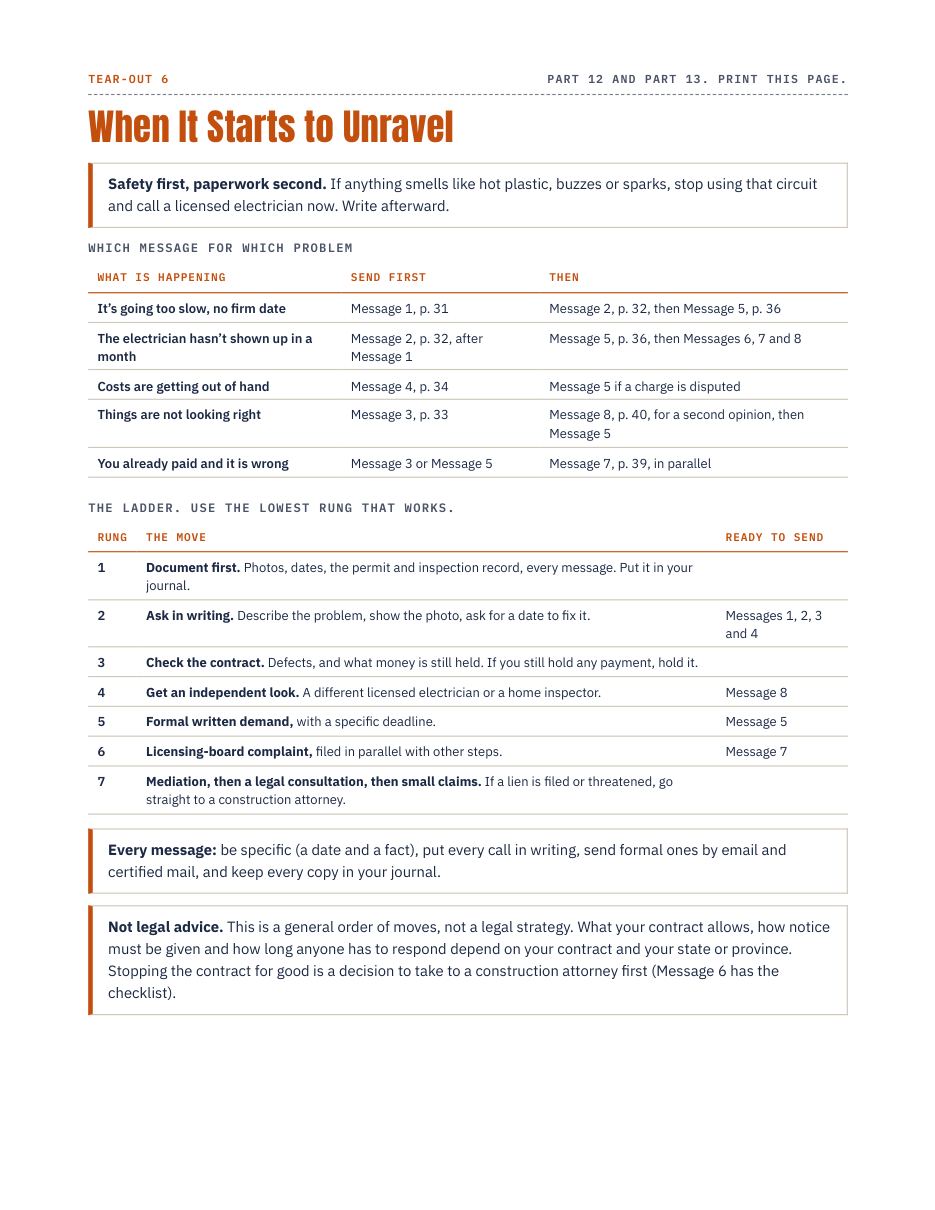
When It Starts to UnravelA one-page card: which message for which problem, and the ladder.
Not legal advice. This web page and the eBook “How To Find A Good Electrical Contractor” are general information and a general order of moves, not a legal strategy. They are not legal, electrical or engineering advice, and they do not create an attorney-client relationship. There is no guarantee of results. Laws, licensing and contracts vary by state and province, and a step that is safe in one place may not be in another. Read your contract, and talk to a construction attorney or a licensed professional before you withhold a payment or end a contract. If anything smells like hot plastic, buzzes or sparks, stop using that circuit and call a licensed electrician now.